

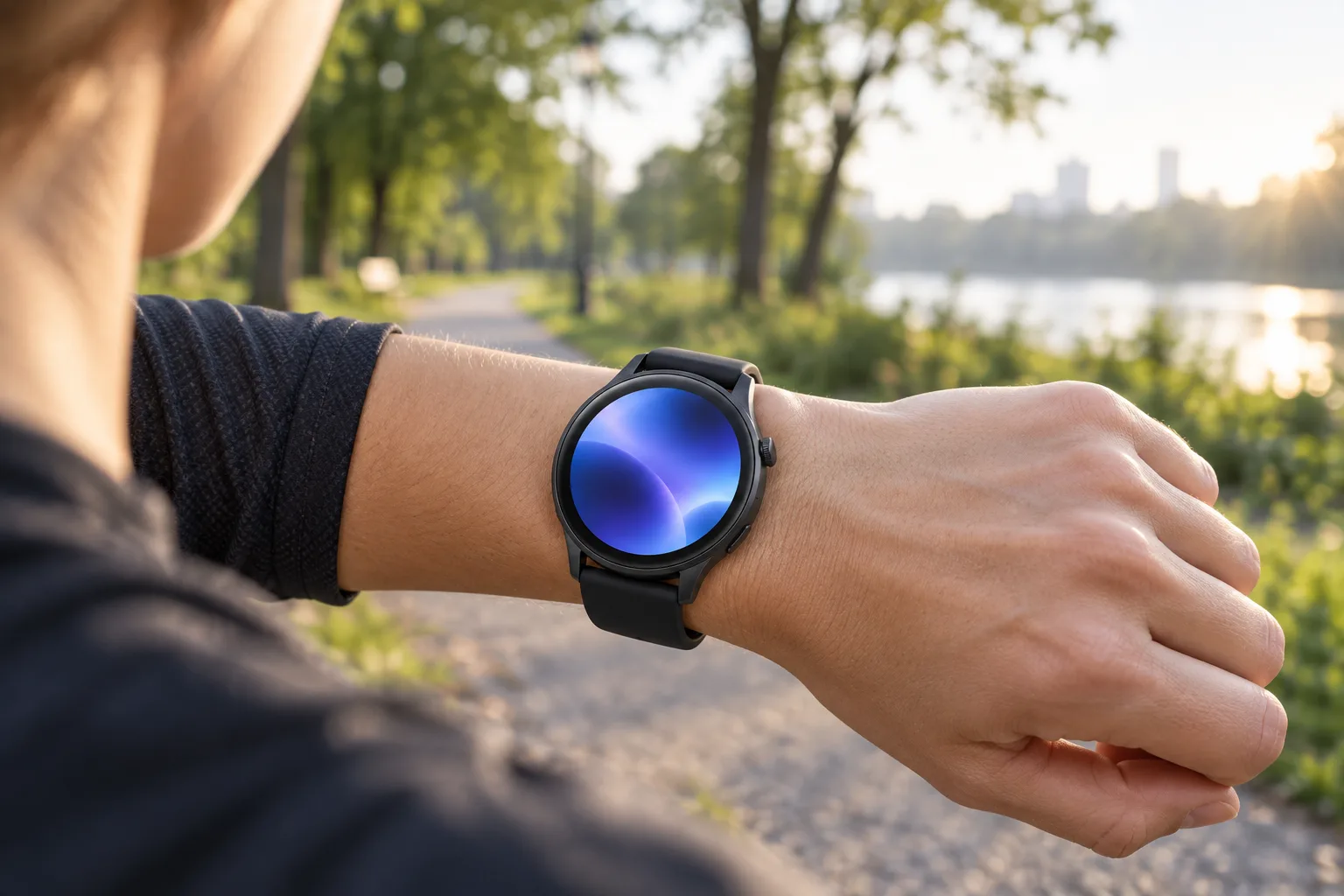
Under $250 you can get a watch that tracks a run accurately, reads your heart rate well enough to train by, and lasts a week of training on one charge. You can also get one that loses a quarter mile on every run and needs charging every other night. The spec sheets look almost the same, so we stopped reading them and went running.
We compared three watches on the same 10K route over three weeks, with a chest strap as the heart rate reference. Like our robot vacuum review, this is about living with the product rather than a single afternoon on a test bench.
The route and the three watches
The route is a loop on the lakefront path, measured with a surveyor’s wheel at 6.21 miles. It has open stretches by the water, a section between tall buildings and an underpass, which together cover most of what trips up a GPS. Two of us ran it ten times, two watches at a time, swapping wrists between runs.
- Veyra Watch 4, $229: a smartwatch first, with a 1.4″ AMOLED display, built-in GPS and a battery rated for up to 7 days.
- A $199 fitness watch: a square, lightweight model from a fitness tracker maker, with an LCD screen and GPS.
- A $249 running watch: from a sports brand, with five buttons, a sunlight-readable screen and dual-frequency GPS.
GPS: distance and pace
Distance is where cheap GPS shows first. A watch that adds a tenth of a mile on every run makes your pace look faster than it is, and your training plan drifts with it.
| Watch | Average distance | Worst run | Time to GPS lock |
|---|---|---|---|
| Veyra Watch 4 | 6.24 mi | 6.31 mi | 12 s |
| $199 fitness watch | 6.29 mi | 6.42 mi | 35 s |
| $249 running watch | 6.22 mi | 6.26 mi | 8 s |
The running watch was the most accurate, which is what its dual-frequency GPS is for. The Watch 4 was within half a percent on average and only strayed near the buildings, where its live pace jumped for about thirty seconds before settling. The fitness watch was the one we would not train by: on its worst run it added a fifth of a mile, and it took long enough to find satellites that we stood at the start stretching for half a minute.
Heart rate and battery over a week
On steady runs all three stayed within 3 bpm of the chest strap. Intervals separated them. On 400 m repeats the Watch 4 lagged the strap by about five seconds at the start of each sprint and caught up before the end. The fitness watch lagged by fifteen, and twice it locked onto our step rate and showed 165 bpm while we were walking the recovery.
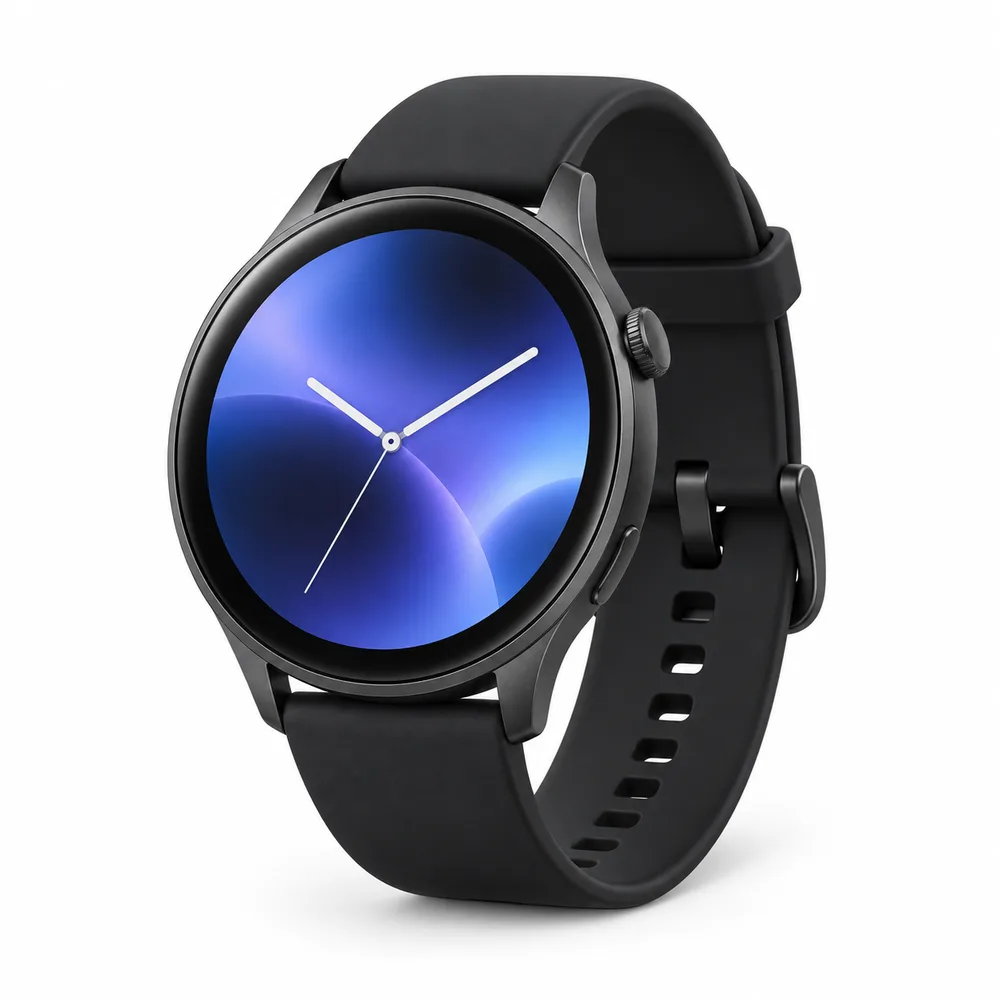
For the battery test we wore each watch for a normal training week: five runs, 4 hours 40 minutes of GPS in total, notifications from a Veyra S6 phone on, always-on display off.
- Veyra Watch 4: six days, with 11 % left before the Sunday long run
- $199 fitness watch: four days
- $249 running watch: the full week, with 30 % to spare
The Watch 4’s rating of up to 7 days is for everyday wear, and with almost five hours of GPS it came close. If you charge it once a week, on the same evening, it fits a training week without thinking about it.
The screen matters as much as the battery. At full brightness on a clear July morning, the Watch 4’s AMOLED stayed readable at a glance, with pace and heart rate in large type. The running watch’s screen is easier still in direct sun and harder to read in a dim hallway. The fitness watch’s LCD washed out at midday, so we checked our pace by tilting a wrist into our own shadow.
“I wanted one watch for running and for the rest of the week. The running watch is better on the trail, but the Watch 4 is the one I actually wanted to wear to work.”
Jenna Morales, store associate and marathoner
Which one to buy
The running watch wins on numbers, and it looks and feels like a sports instrument: the buttons work with gloves in January, but the screen is dim indoors and the smartwatch features are thin. The Watch 4 gives up a little GPS accuracy for a bright AMOLED screen, phone notifications and a watch you will wear off the trail. Most of us ran with the phone in a belt and Aura Buds Pro in our ears, skipping tracks from the wrist.
- Veyra Watch 4: you run three to five times a week and want one watch for everything else too
- A dedicated running watch: you train for marathons or trail races and need the best GPS and the longest battery
- A budget fitness watch: you count steps and walk more than you run
-
Shop the story
Veyra Watch 4 Smartwatch – 44 mm, AMOLED, GPS, Black
Original price was: $279.$229Current price is: $229.Ships in 1 business day
View: Veyra Watch 4 Smartwatch – 44 mm, AMOLED, GPS, Black
Quick answers
Do I need a chest strap?
Not for easy and steady runs; the wrist sensor on the Watch 4 was close enough. If you train by heart rate zones on intervals, a strap reacts faster, and most watches in this price range pair with one over Bluetooth.
Does a few percent of GPS error matter for a beginner?
Not much. What matters is that the watch is consistent, so this week’s run compares with last week’s. The Watch 4 was; the fitness watch added up to a fifth of a mile on the same loop.


One response
Author
Good to see battery tested with GPS on. The box numbers never match a real training week.
Comments are closed.