

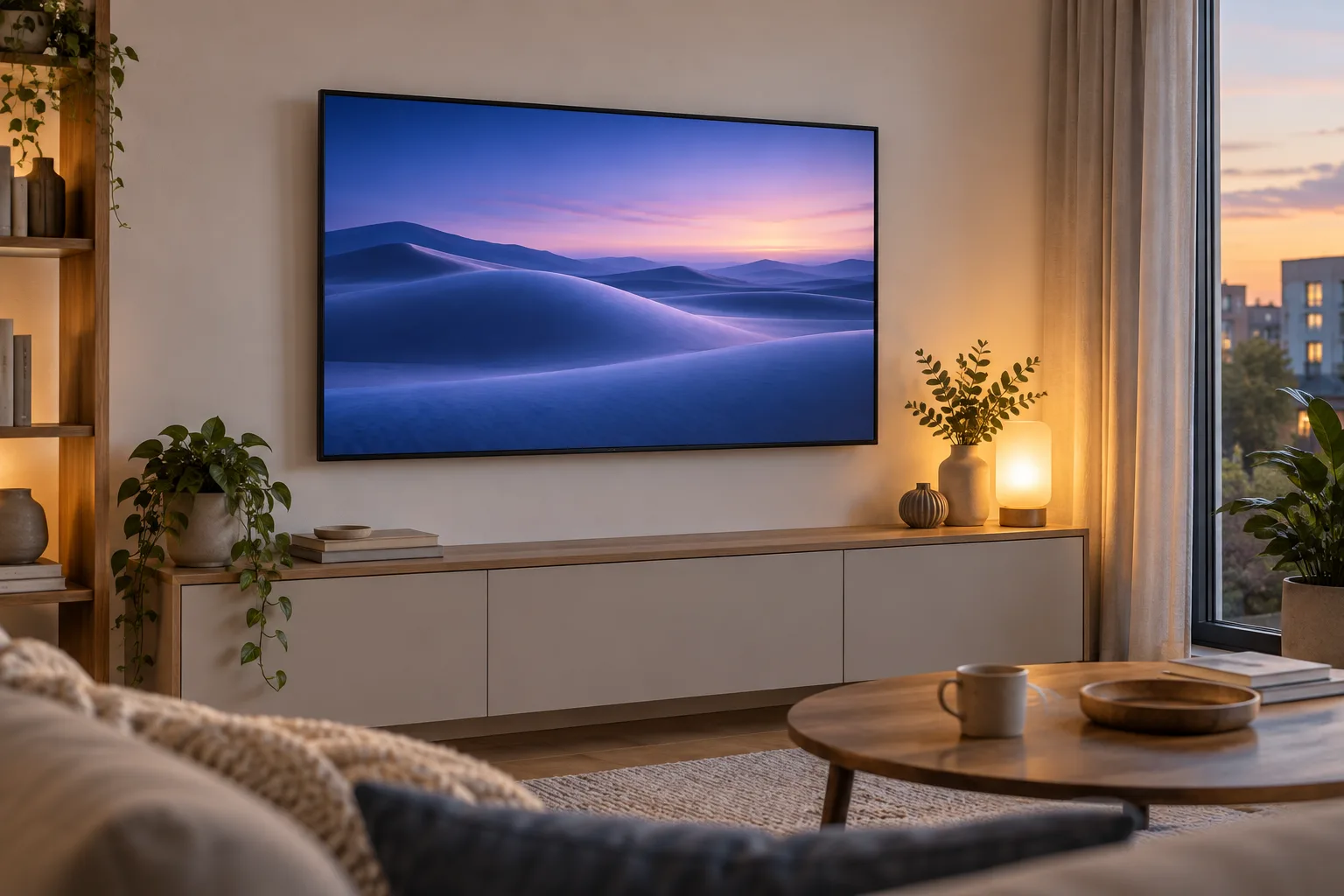
Ten inches of diagonal sounds like a small step, and on the sales floor, under high ceilings and next to an 85″ set, both sizes look modest. At home the difference is about 9 inches of width and a picture with 40 percent more area. Whether that feels right or overwhelming depends mostly on one number: how far your eyes are from the screen.
So we started with a tape measure. We measured the distance from the couch in the living rooms of our store associates, checked how the picture holds up from the side seats, and worked out when a bigger screen stops helping. The table below is the short answer; the rest of the guide explains the exceptions.
Measure from your eyes, not the couch
We asked 26 associates from our Chicago-area stores to measure their living rooms. The shortest distance was 5 ft 8 in, the longest 11 ft 2 in, and the median 7 ft 6 in, which sits exactly on the line between 55 and 65 inches. That is why this question comes up at the TV wall every day.
Most people measure from the front edge of the couch, and most are about a foot and a half off. Here is how to get the number that matters:
- Sit in your usual spot and lean back the way you do during a film.
- Have someone measure from your eyes to the wall or the front of the stand where the screen will be.
- On a deep sectional, measure the seat you use most, not the closest one.
Viewing distance by screen size
For 4K, a comfortable screen fills about 30 to 40 degrees of your view. Sit closer and you start turning your head to follow the action; sit farther and the extra detail of 4K is lost, so the picture looks no sharper than Full HD.
| Eyes to screen | Size we recommend | Screen width, approx. |
|---|---|---|
| 4 ft 6 in – 5 ft 6 in | 43–50″ | 38–44 in |
| 5 ft 6 in – 7 ft | 55″ | 48 in |
| 7 ft – 8 ft 6 in | 55″ or 65″ | 48–57 in |
| 8 ft 6 in – 10 ft | 65–75″ | 57–66 in |
| Over 10 ft | 75″ and larger | 66 in and up |
The overlap from 7 to 8 ft 6 in is where the median living room sits. In our measurements, the people in that zone who watch mostly sports and streaming films were happiest with 65 inches. Those who watch a lot of cable news, sitcoms and video calls on the TV were just as happy with 55, and kept the difference in their pocket.
The same geometry works at a desk. A 27-inch monitor two feet from your face fills about 50 degrees of your view, more than any TV in the table, which is why the resolution question for monitors has a different answer.
Viewing angles and the wall
Distance is only half of it. We set up the Klarvis 55U8 in a living room with an L-shaped sectional and watched the same scene from every seat. Straight on and up to about 25 degrees to either side, the picture held its contrast. From the far end of the sectional, roughly 40 degrees off center, dark scenes turned grayish and colors lost some depth. That is typical of QLED TVs at this price, and a bigger screen does not fix it; it only makes the side seat feel closer.
Height matters more than most people think. The center of the screen should sit close to seated eye level, about 40 to 42 in from the floor. Above a fireplace a 65″ set puts the center near 5 ft, and after a two-hour film you feel it in your neck. If the TV has to go high, a smaller screen is the kinder choice.
Then look at the windows. A screen opposite a south-facing window catches the afternoon sun whatever its size, but a bigger panel catches more of it. We watched a ball game on the 55U8 at 2 pm in a bright room with the blinds open: the QLED panel stayed bright enough to follow the score, and the reflections, not the brightness, were what bothered us. If you can, put the TV on a wall at a right angle to the windows rather than facing them.
“Almost nobody tells us their TV is too big after a month. What we do hear is that it sits too high or the couch is at an angle. Fix those first, then choose the size.”
Marcus Bell, home theater associate, Kilowatt Schaumburg
Check the furniture too. A 55U8 is about 48 in wide; a 65″ set is about 57 in. On a stand, the TV should not hang past the ends of the console, both for looks and so nobody catches a corner on the way past. Mark the width on the wall with painter’s tape before you buy and live with it for an evening.
-
Shop the story
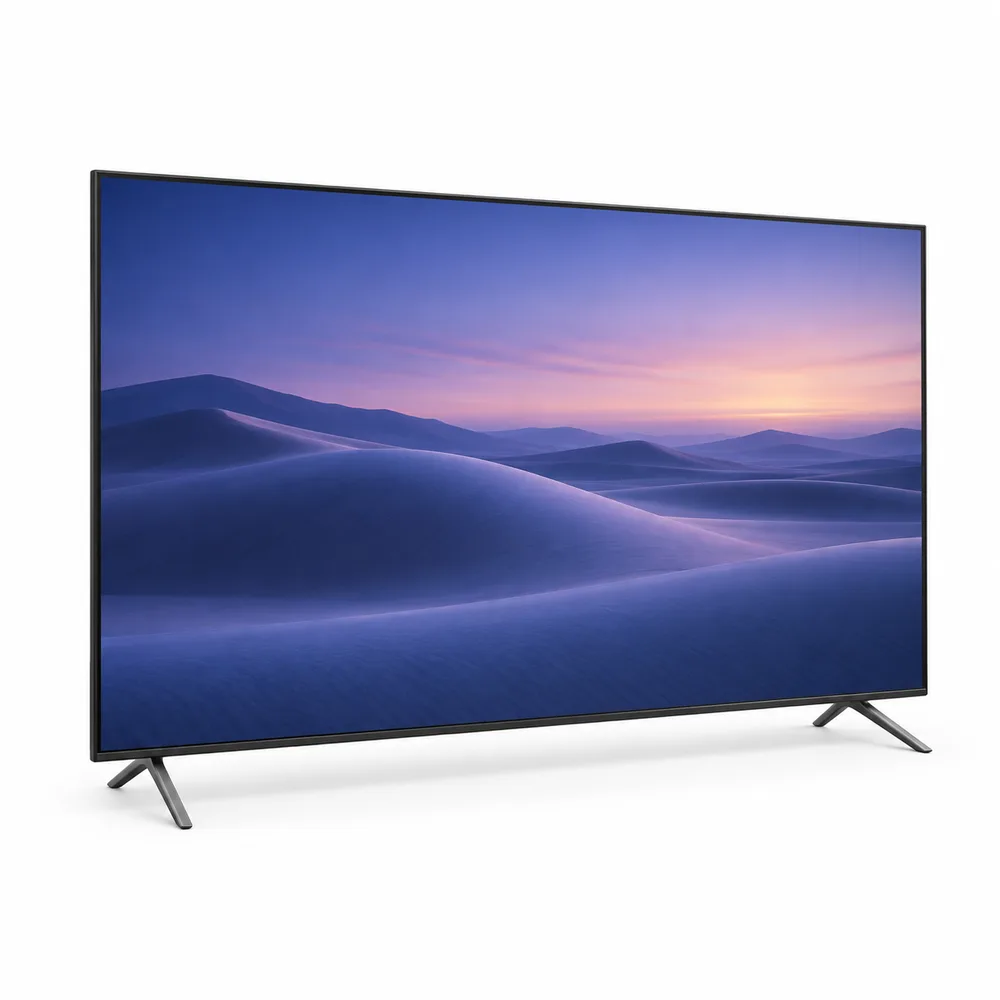
Klarvis 55U8 55″ Class 4K QLED Smart TV – 120 Hz, HDR10+
Original price was: $649.$549Current price is: $549.Ships in 3–5 business days
View: Klarvis 55U8 55″ Class 4K QLED Smart TV – 120 Hz, HDR10+
When a bigger screen is too much
Sixty-five inches is the right answer for many living rooms, but not for all of them. We would stay with 55 when:
- You sit closer than 7 ft. The picture spills past the edge of your view and fast sports become tiring to follow.
- Most of what you watch is not 4K. Cable channels at 720p or 1080i look soft on any screen, and more so on a bigger one.
- The wall or console is narrow. Under 50 in of console, a 65″ set overhangs it.
- The room is small and bright. When the TV is off, a large black rectangle dominates the room and reflects every window.
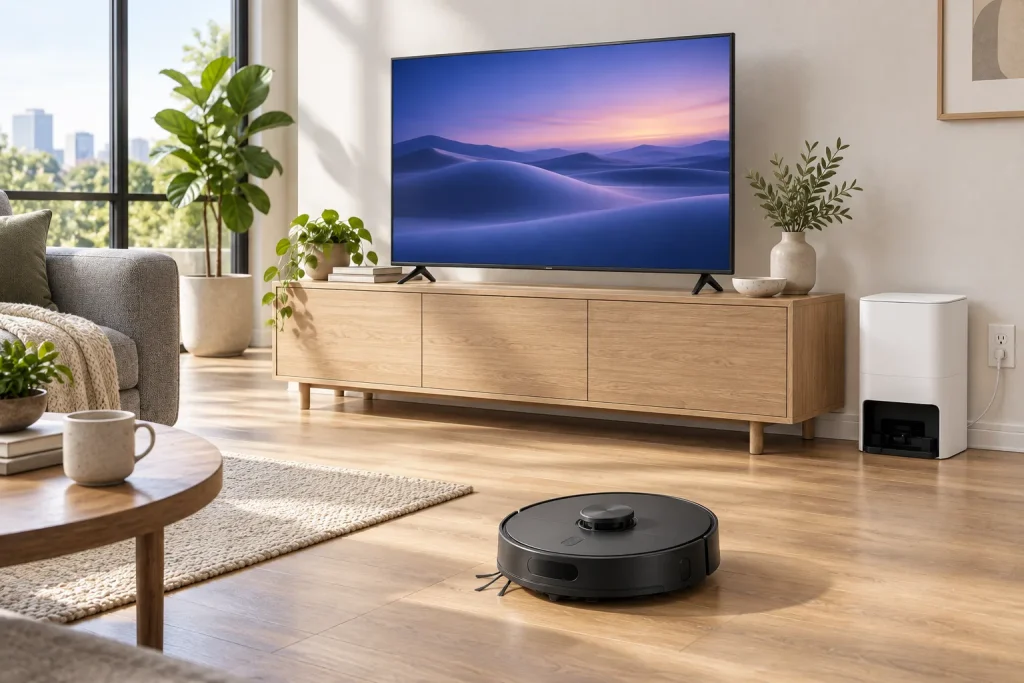
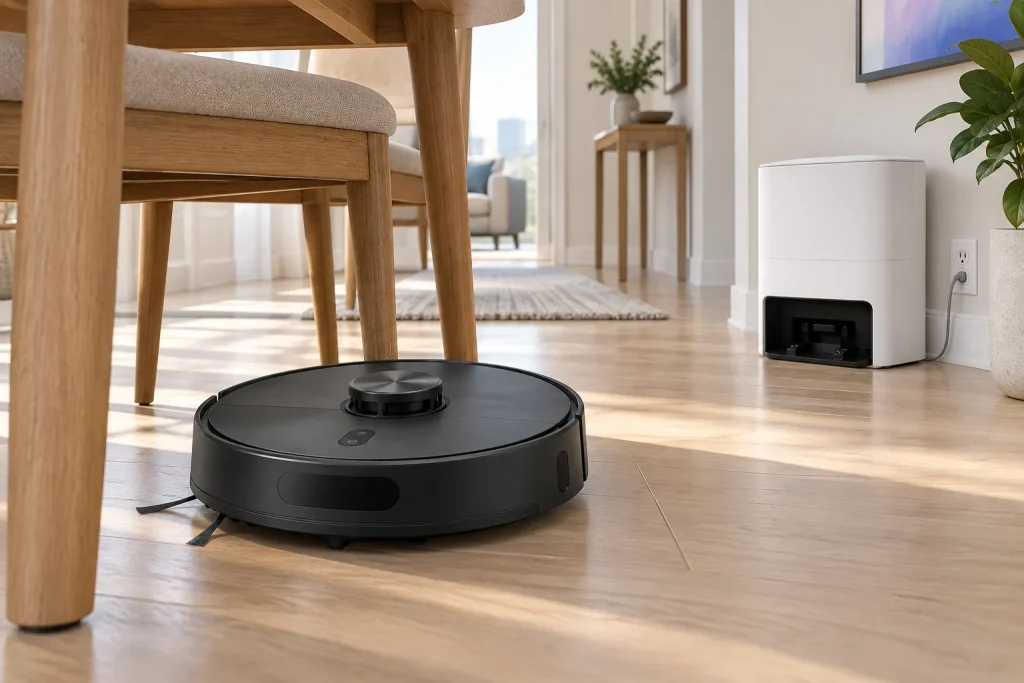
Whichever size you choose, the picture is only as good as the stream. A 4K film needs a steady 25 Mbps or so, and a TV at the far end of the house is often the first device to drop to a lower resolution. If that sounds familiar, our guide to mesh Wi-Fi at home explains when a system like the Netra Mesh 7 helps. And if the living room floor is already crowded with cables and a console, the Bryza X9 robot vacuum in the photo above will tell you within a week which ones need tidying.
The 55U8 is $549 this month, with free next-day delivery or pickup in store, and 12 months at 0% APR. If you are still unsure, bring your measurements to the TV wall in any of our 38 stores and we will show you both sizes from the right distance.
2 responses
Author
Our couch is about 9 feet from the wall. Sounds like 65 is the safer pick?
Author
At 9 feet, yes: a 65-inch fills about the same part of your view that a 55-inch does at 7 and a half. If you can, stand at the couch and tape the outline on the wall first.
Comments are closed.